
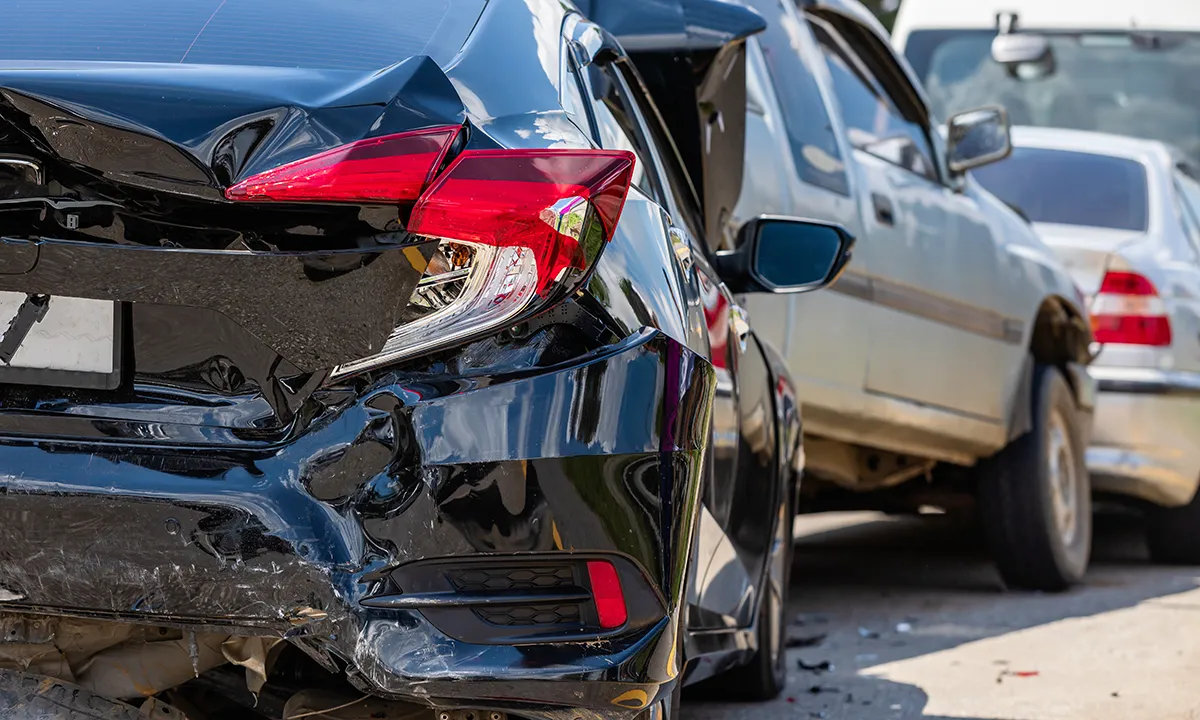
Rear-End Collisions in Florida: Why the Presumption of Fault Is Not Automatic
Florida presumes the rear driver caused a rear-end crash, but that presumption is rebuttable and these cases are governed by comparative negligence. Being rear-ended does not guarantee a full recovery, and adjusters know exactly where the exceptions live.

Quick Summary
Florida law presumes the rear driver caused a rear-end collision, but that presumption is rebuttable, not absolute. The Florida Supreme Court confirmed that these cases are governed by comparative negligence, which means the front driver's conduct can matter. If you were rear-ended in Miami-Dade, Broward, or Palm Beach County, the insurance company may still try to shift a share of fault onto you.
→ Complete Florida Accident Guide
Key Takeaways
- Rear-end crashes are the most common crash type on American roads, and between 2012 and 2014 nearly half of all two-vehicle crashes were rear-end crashes. SOURCE: NTSB Safety Alert SA-046
- A 2007 federal study found that 87 percent of rear-end crashes involved a driver failing to attend to the traffic ahead. SOURCE: NTSB Safety Alert SA-046, citing NHTSA
- Florida's rear-end presumption is rebuttable, not a rule that automatically assigns 100 percent of fault to the rear driver.
- The Florida Supreme Court held in 2012 that rear-end collision cases are governed by comparative negligence, and that disputed fault questions go to a jury. SOURCE: Birge v. Charron, 107 So. 3d 350 (Fla. 2012)
- Being rear-ended does not guarantee a full recovery. Florida bars recovery entirely if you're found more than 50 percent at fault.
- Low-speed impacts produce real injuries, and insurers routinely argue otherwise using photographs of the bumper.
- Your PIP benefits require treatment within 14 days, regardless of how obvious the other driver's fault appears.
What This Means for You
If you were rear-ended, someone has probably already told you the case is simple. Rear driver hits front driver, rear driver is at fault, done.
That's the presumption, and it's real. But it isn't the whole rule, and insurance adjusters know exactly where the exceptions live. I've watched clients walk in convinced their case was automatic and walk out learning the other insurer had assigned them 30 percent of the blame for a brake light that wasn't working.
The presumption is a starting point that shifts the burden. It's not a verdict.
In 16 years of handling Florida injury claims and recovering more than $100 million for clients, the rear-end cases that go badly almost always go badly for one of two reasons. Either the front driver's conduct opened a door, or the injuries got dismissed as too minor to be real.
Both are solvable, and both are easier to solve early.
How the Rear-End Presumption Actually Works in Florida
Where the Presumption Comes From
Florida courts developed a rebuttable presumption that the rear driver's negligence was the sole proximate cause of a rear-end collision. In practice, it means the rear driver starts out carrying the burden of explaining why they weren't at fault.
That's a meaningful advantage if you're the front driver. It's not the same as immunity.
What the Florida Supreme Court Clarified
In 2012, the Florida Supreme Court decided Birge v. Charron and Cevallos v. Rideout on the same day. The Court held that rear-end collision cases are substantively governed by the principles of comparative negligence. SOURCE: Birge v. Charron, 107 So. 3d 350 (Fla. 2012); Cevallos v. Rideout, 107 So. 3d 348 (Fla. 2012)
The Court explained that where evidence is produced from which a jury could conclude the front driver was negligent in bringing about the collision, or that the rear driver's negligence wasn't the sole proximate cause, the presumption is rebutted and the disputed fault questions go to the jury.
Read that carefully, because the defense reads it carefully. It doesn't take proof that the front driver caused the crash. It takes enough evidence that a jury could find the front driver contributed.
What Rebuts the Presumption
The arguments I see most often against front drivers include:
- Brake lights that weren't functioning
- An abrupt stop with no apparent reason
- Reversing into the vehicle behind
- Stopping in a travel lane or an unsafe location
- Merging or cutting in without adequate space
- A mechanical failure the front driver knew about
- Sudden movement while distracted
Some of these are legitimate. Many of them are manufactured after the fact, in a recorded statement the front driver gave without thinking about it.
Why Comparative Negligence Matters More Than It Used To
Florida applies modified comparative negligence. A claimant found more than 50 percent at fault recovers nothing at all, and any recovery below that threshold is reduced by the claimant's share of fault. SOURCE: Fla. Stat. § 768.81
Think about what that does to a rear-end case. If your damages are $200,000 and you're assigned 25 percent of the fault for a burned-out brake light, you recover $150,000. If an insurer can push you past 51 percent, you recover nothing.
That's the entire reason adjusters ask front drivers whether they stopped suddenly. There's no innocent version of that question.
→ What Your Personal Injury Case Is Really Worth (And Why You're Probably Wrong About It
The Injury Fight in Rear-End Cases
Why Insurers Argue the Impact Was Too Minor
Rear-end collisions are the classic low-property-damage, high-injury crash. Modern bumpers are engineered to absorb energy and spring back, which means a car can look nearly untouched while the occupant's neck absorbed a violent forward and backward motion.
Insurers have built an entire playbook around this. Photograph the bumper, argue that minimal damage means minimal force, and offer accordingly.
Why the Delay Argument Works So Well Against You
Soft tissue injuries and cervical strain often don't present fully for 24 to 72 hours. People go home, feel stiff, assume it'll pass, and wait a week before seeing anyone.
That week becomes the defense. Florida's 14-day rule already puts a hard limit on your PIP eligibility, and every day of gap between the crash and your first treatment gets used to argue that something else caused your symptoms.
→ The 14-Day Rule in Florida: Why Waiting Could Destroy Your Injury Claim
What Actually Documents the Injury
Consistent treatment from the beginning, honest reporting of every symptom rather than only the worst one, and diagnostic imaging where it's clinically warranted. The record you build in the first month is the record the case gets valued on.
A Case Where the Presumption Almost Didn't Save My Client
I represented a woman stopped in traffic on US-1 in Palm Beach County when a pickup hit her from behind at maybe fifteen miles an hour. Her bumper had a scuff. Her neck had two herniated discs.
The insurer did two things. First, they photographed the bumper and offered a number that wouldn't have covered her first round of physical therapy. Second, they got her on a recorded statement three days after the crash, before she'd talked to anyone, and asked whether she'd stopped suddenly. She said something like "I guess I did, traffic stopped fast." That sentence became their whole comparative fault argument.
What turned it around was ordinary evidence collected properly. A traffic camera confirmed the entire line of cars ahead of her had come to a complete stop well before impact, so her stop wasn't sudden relative to traffic. Her brake lights were verified as functional in the repair inspection. And her treating physician documented the injury progression from day one, which took the minor-impact argument off the table.
She recovered fully on the claim. She'd have recovered a fraction of it if she'd stayed silent about the imaging or given that statement another week to harden.
If you were rear-ended anywhere in Miami-Dade, Broward, or Palm Beach County, call my office today for a free consultation. There's no fee unless I win your case. Contact Me today
What to Do After a Rear-End Collision in Florida
- Call the police and get a report, even for a low-speed impact. Drivers who agree to handle it privately at the scene routinely change their account within the week.
- Photograph both vehicles from multiple angles, including the undercarriage area behind the bumper cover. Visible damage is often minimal while the structure underneath tells a different story.
- Photograph your own brake lights and turn signals working. This takes thirty seconds and directly defeats the most common rebuttal argument used against front drivers.
- Document the traffic conditions around you. Photograph the line of stopped cars ahead, the signal, and the roadway. Context is what shows your stop wasn't sudden.
- Get names and numbers for witnesses before anyone leaves. In a rear-end case, an independent witness who saw the following distance is worth more than almost anything else.
- Seek medical evaluation within 24 to 48 hours, and no later than 14 days. Report every symptom, including the ones that seem minor. Do not describe yourself as fine.
- Do not give a recorded statement to the other driver's insurer. Every question in that call is designed to find a percentage of fault to assign you.
- Note whether the other vehicle was commercial or fleet-operated. If it was, telematics data may exist, and it needs to be preserved in writing quickly.
- Call a Florida injury attorney before accepting any offer. Early rear-end offers arrive before anyone knows the extent of the injury, which is exactly why they arrive early.
⚠️ Critical Warning: If the other driver's insurer asks whether you stopped suddenly, understand what that question is for. It's the setup for a comparative fault argument that can reduce or eliminate your recovery. Politely decline the recorded statement and speak to an attorney first.
Frequently Asked Questions
Is the rear driver always at fault in a Florida rear-end collision?No. Florida applies a rebuttable presumption that the rear driver's negligence was the sole cause. The Florida Supreme Court confirmed that these cases are governed by comparative negligence and that disputed fault questions go to the jury. SOURCE: Birge v. Charron, 107 So. 3d 350 (Fla. 2012)
Can I be blamed for being rear-ended?You can be assigned a share of fault if there's evidence you contributed, such as non-functioning brake lights, reversing, or stopping in an unsafe place. Under Florida's modified comparative negligence rule, being found more than 50 percent at fault bars recovery entirely.
What if my car barely has any damage?Low property damage doesn't mean low injury. Modern bumpers are designed to absorb and rebound from impact energy, which is precisely why occupants can be hurt in a crash that leaves little visible damage.
How long do I have to file a rear-end collision claim in Florida?Most Florida negligence claims must be filed within two years of the date of injury. Your PIP benefits have a separate and much shorter requirement of medical treatment within 14 days.
What if I was rear-ended by a commercial or delivery vehicle?Commercial fleets often carry telematics recording speed, braking, and following distance. That data can be decisive, and it may be overwritten on a rolling cycle if no one demands its preservation.
Do I have to use my own PIP first?Yes. Florida's no-fault system means your own PIP is the first payer for medical expenses up to your policy limit regardless of who caused the crash.
What if I was rear-ended in a chain-reaction crash?Multi-vehicle rear-end crashes require sorting out the order and force of each impact. Fault can be shared across several drivers, and each may carry separate coverage.
Does the police report decide fault?No. The report is evidence, and it's influential, but the officer wasn't there and fault is ultimately decided by the parties, the insurers, or a jury.
What if the other driver was uninsured?Your uninsured motorist coverage may apply, if you carry it. Florida doesn't require most drivers to carry bodily injury liability coverage, which is why UM coverage matters so much here.
→ What to Do If the At-Fault Driver Has No Insurance in Florida
Should I accept the first settlement offer?Almost never. Early offers in rear-end cases are made before the extent of the injury is documented, which is exactly what makes them attractive to the insurer.
Final Thoughts
The word "presumption" does a lot of quiet damage in these cases. People hear it and translate it as guaranteed, then act accordingly. They skip the police report, they skip the photographs, they talk freely to an adjuster, and they wait a week to see a doctor because the case felt like a formality.
None of those choices would seem reasonable in a disputed-fault case. They're just as unreasonable here. The presumption shifts a burden. It doesn't do your work for you.
What I'd want you to remember is the brake light photograph. Thirty seconds at the scene, with someone standing behind your car while you press the pedal, forecloses the single most common argument the other side will make. Almost nobody does it, and it's free.
Get Help Now
If you were rear-ended in Miami-Dade, Broward, or Palm Beach County, I'd like to hear what happened before you talk to the other driver's insurance company. Kris Torres Injury Law has offices in Miami and Jupiter, and I offer a free consultation with no obligation. I work on a contingency fee, which means you pay nothing unless I recover money for you. Call now for a free case review.