
Florida's New Crash Reporting Law: Why You Should Still Call the Police After a Minor Accident
As of October 1, 2026, Florida no longer requires a police report for property-damage-only crashes under $2,000. Here's why you should still call, and what to do if no officer comes.

Quick Summary
Starting October 1, 2026, Florida drivers no longer have to notify police after a crash that causes only property damage unless that damage appears to be at least $2,000. The old threshold was $500. That sounds like a convenience, but it creates a real risk for you: if you skip the report and your neck or back starts hurting two days later, you may have no official record of the crash, the other driver, or their insurance. Any crash involving an injury, or even a complaint of pain, still has to be reported.
→ Complete Florida Accident Guide
Key Takeaways
- The reporting threshold jumped from $500 to $2,000 on October 1, 2026, under Senate Bill 488 (Chapter 2026-39, Laws of Florida), which amended Fla. Stat. § 316.065. SOURCE: The Florida Senate, SB 488 (2026)
- Injury crashes still must be reported. The new $2,000 threshold only applies to crashes with property damage and no injuries.
- Pain counts as an injury for reporting purposes. Under Fla. Stat. § 316.066, any complaint of pain or discomfort requires a long-form police crash report.
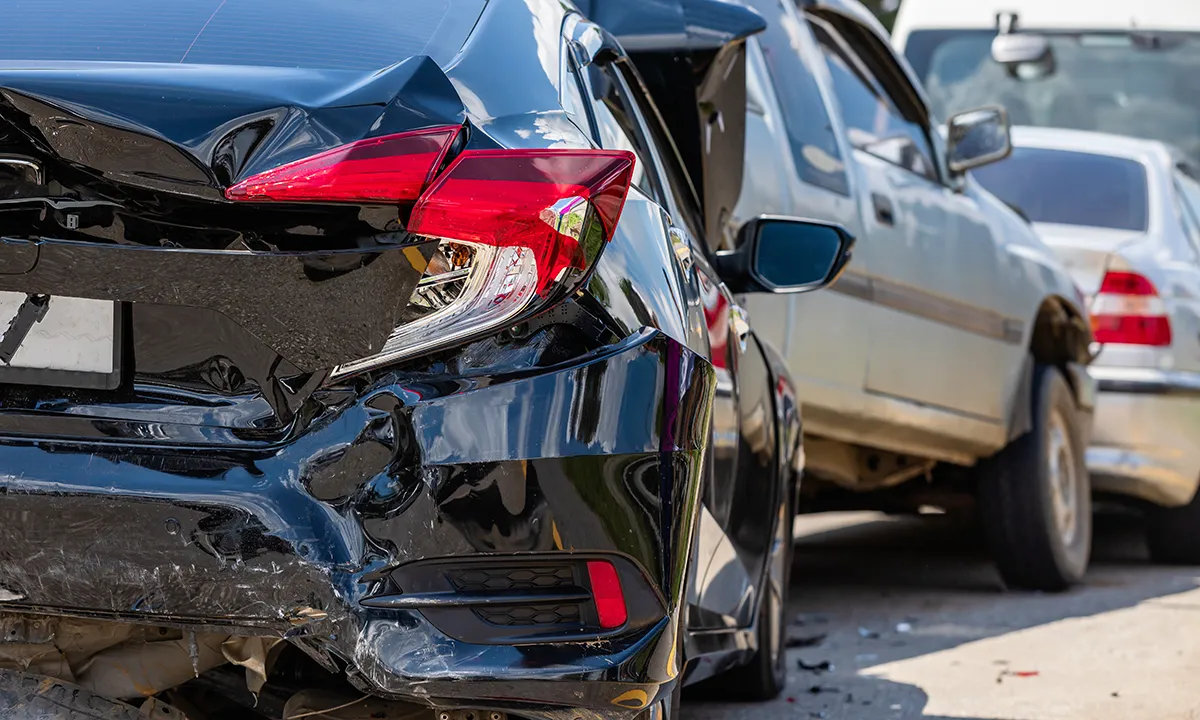
- $2,000 isn't much damage anymore. A cracked bumper with parking sensors or a camera can pass that number fast, and you can't estimate it accurately at the roadside.
- No report can mean no proof. Without an officer's report, you may be left without the other driver's verified identity, insurer, or witness information.
- Your 14-day PIP deadline still applies. Whether or not police came, you have 14 days to get medical care to keep your Personal Injury Protection benefits under Fla. Stat. § 627.736.
What This Means for You
The law changed what you're required to do. It didn't change what's smart to do.
If you're rear-ended at a light on Biscayne Boulevard or sideswiped in a parking lot in Boca Raton, you may now hear, "It's under $2,000, we don't need the police." The other driver may say it. A dispatcher may say it. You might even think it yourself.
Here's my advice after 16 years of handling Florida injury claims: treat every crash as if it might become an injury claim, because you won't know for a few days whether it will. Ask for a report. If an officer won't come, document everything yourself and file the state's driver report. The rest of this guide shows you how.
What Changed on October 1, 2026
The old rule and the new rule
Florida law has long required drivers to immediately notify police of any crash that causes injury, death, or property damage above a set dollar amount. For years, that amount was $500. SB 488 raised it to $2,000, effective October 1, 2026. SOURCE: The Florida Senate, SB 488 (2026), Effective Date 10/1/2026, Chapter No. 2026-39.
A crash reporting threshold is the estimated amount of property damage that triggers your legal duty to call law enforcement. Below that amount, with no injuries, Florida no longer requires you to call.
What didn't change
Some crashes must still be reported no matter how small the damage looks. Under Fla. Stat. § 316.066, an officer who investigates must complete a long-form crash report when the crash:
- Caused a death, an injury, or any complaint of pain or discomfort by anyone involved
- Involved a driver leaving the scene or a driver suspected of driving under the influence
- Left a vehicle so disabled it had to be towed
- Involved a commercial motor vehicle
SOURCE: Fla. Stat. § 316.066(1)(a), The Florida Senate
You also still have to stop, exchange information, and show your driver's license under Fla. Stat. § 316.062. And if a crash causes property damage but no police report is made, Florida law requires the driver to file a written crash report with the Florida Department of Highway Safety and Motor Vehicles (FLHSMV) within 10 days. SOURCE: Fla. Stat. § 316.066(1)(e)
That last rule catches a lot of drivers off guard. Skipping the police doesn't mean skipping the paperwork.
Why "Minor" Crashes Are Where Injury Claims Fall Apart
Injuries often show up later
Soft tissue injuries, concussions, and disc problems don't always announce themselves at the scene. Adrenaline masks pain. You feel shaken, you're worried about your car, and you drive home thinking you're fine.
Then you wake up stiff. By the weekend, you can't turn your head. By then, the crash that "didn't need a report" is an injury claim with no official record behind it.
This happens far more often than people think. The National Highway Traffic Safety Administration (NHTSA) estimates that in a single year, 2019, motor vehicle crashes in the United States injured 4.5 million people and damaged 23 million vehicles, counting both police-reported and unreported crashes. SOURCE: NHTSA, The Economic and Societal Impact of Motor Vehicle Crashes, 2019 (Revised)
The other driver's story can change overnight
At the scene, the other driver apologizes. The next day, their insurance company calls you and says their customer claims you stopped short, or changed lanes, or hit them.
Without a report, the first written version of events may be the one their insurer takes down. That puts you on defense in your own claim.
Insurers notice what's missing
Insurance adjusters look for gaps. No police report, a delay before medical care, and a low repair estimate are the three things I see them combine most often to argue that "nothing serious happened."
The costs they're trying to avoid are real. NHTSA's same report found that crashes caused $31 billion in medical expenses and $115 billion in property damage nationwide in 2019. SOURCE: NHTSA, The Economic and Societal Impact of Motor Vehicle Crashes, 2019 (Revised). The insurance industry has every reason to keep your share of that number as small as possible.
What a Police Crash Report Actually Does for You
A Florida crash report records the date, time, and location of the crash, the vehicles involved, the names and addresses of everyone involved, witness names and addresses, the investigating officer, and each party's insurance company. SOURCE: Fla. Stat. § 316.066(1)(b), The Florida Senate
That's the foundation of every claim I build. It confirms who the other driver really is, which insurer covers them, and who saw what happened.
One important detail: Florida's crash report privilege generally keeps the statements you make to an officer for the report out of evidence at a civil trial. SOURCE: Fla. Stat. § 316.066(4) That's why the report's biggest value comes early. It locks in identities, insurers, and witnesses while the facts are fresh, long before anyone argues about fault in a courtroom.
What to Do After a Minor Accident in Florida Now
Step 1: Check yourself and everyone else, and say so if anything hurts
If you feel any pain or discomfort, even mild, tell the other driver and tell the officer. Under Fla. Stat. § 316.066, a complaint of pain turns the crash into one that requires a long-form report. Don't tough it out to be polite.
Step 2: Call the police anyway
Call your local police department's non-emergency line, or 911 if anyone is hurt or the vehicles are blocking traffic. In Miami-Dade, Broward, and Palm Beach counties, agencies may decline to respond to a property-damage-only crash under the new threshold. Ask anyway, and write down the time you called and the name of the person you spoke with.
Step 3: Exchange and photograph the other driver's information
Get the driver's name, address, license number, plate, vehicle description, and insurance company and policy number. Photograph their license and insurance card instead of copying them by hand. If the driver refuses to share information, that alone is a reason to insist on police.
Step 4: Document the scene yourself
Take wide photos showing both vehicles and their positions, then close-ups of all damage, including yours and theirs. Photograph traffic signals, skid marks, and debris. Get names and phone numbers from anyone who stopped.
Step 5: File the FLHSMV driver report within 10 days if no officer reported the crash
If no law enforcement report was made, Florida requires you to submit a written crash report to FLHSMV within 10 days. SOURCE: Fla. Stat. § 316.066(1)(e); Keep a copy. It becomes your official record.
Step 6: Get medical care within 14 days
Florida's PIP law requires you to receive initial medical treatment within 14 days of the crash to qualify for benefits. SOURCE: Fla. Stat. § 627.736(1)(a) Go even if you only feel sore.
→ The 14-Day Rule in Florida: Why Waiting Could Destroy Your Injury Claim
Step 7: Be careful with recorded statements
Report the crash to your own insurer as your policy requires. If the other driver's insurance company asks for a recorded statement, you don't have to give one on their schedule. Talk to a lawyer first.
If you were rear-ended, fault may already lean your way under Florida law, but only if the facts are documented.
→ Rear-End Collisions in Florida: Who Is Presumed at Fault
A Case That Shows Why This Matters
A client came to me after a low-speed crash in a Hialeah shopping center. The other driver backed into her door, apologized, and said they could "handle it without the police." She agreed, took a photo of his insurance card, and went home.
Three days later she had numbness running down her arm. When she called his insurer, the driver's version had changed completely: now she had pulled out in front of him. There was no report and no witness information, and his insurance card turned out to be for a policy that had lapsed.
We rebuilt the case from her photos, the store's surveillance video, and her medical records, and she recovered. But it took months of work that a 20-minute police report would have saved.
If a "minor" crash is turning into a major problem for you, don't wait for the insurance company to decide what happened. Call Kris Torres Injury Law for a free case review. We'll tell you where your claim stands and what to do next. Your consultation is free, and you pay nothing unless we win your case.
Frequently Asked Questions
Do I have to call the police after a minor car accident in Florida?As of October 1, 2026, you must immediately notify police of any crash that causes injury, death, or apparent property damage of at least $2,000. Below $2,000 with no injuries, it's no longer required, but calling is still the safest choice.
What was Florida's crash reporting threshold before October 1, 2026?It was $500. Senate Bill 488 (Chapter 2026-39, Laws of Florida) raised it to $2,000, effective October 1, 2026.
Does the new $2,000 rule apply if someone is hurt?No. Any crash involving injury, death, or a complaint of pain or discomfort still requires law enforcement involvement and a long-form crash report under Fla. Stat. § 316.066.
What if the police won't come to my accident?Document the scene thoroughly, exchange information with the other driver, and file a written crash report with FLHSMV within 10 days as required by Fla. Stat. § 316.066(1)(e). Write down when you called police and who you spoke with.
How do I know if the damage is over $2,000?You usually can't know at the scene. Modern bumpers often contain sensors, cameras, and brackets, and repair costs can pass $2,000 even when damage looks cosmetic. If there's any doubt, call.
Can I still file an injury claim if there's no police report?Yes. A police report isn't legally required to bring an injury claim in Florida. But without one, proving who the other driver is, which insurer covers them, and what happened becomes much harder.
Does the 14-day rule still apply if police didn't respond?Yes. Florida's PIP law requires initial medical treatment within 14 days of the crash, regardless of whether a police report exists.
Can what I say to the officer be used against me?Under Florida's crash report privilege, statements you make to an officer to complete a crash report generally can't be used as evidence at trial. That doesn't mean you should guess about fault. Stick to facts.
How long do I have to file an injury lawsuit after a Florida car accident?For most negligence claims, Florida's statute of limitations is two years from the date of the crash under Fla. Stat. § 95.11. Waiting that long is risky because evidence fades quickly.
Final Thoughts
This change was designed to save law enforcement time on fender benders, and it probably will. What it also does is shift the job of documenting a crash onto you, at the exact moment you're rattled and least prepared to do it.
The drivers who come through this well are the ones who slow down for ten minutes at the scene: they ask for police, photograph everything, and file the state report if no officer comes. That small effort is the difference between a claim built on records and a claim built on your word against theirs.
→ What to Do Immediately After a Car Accident in Florida: Your First-Hour Action Plan
Get Help Now
If you were hurt in a crash that "didn't need" a police report, you still have options, but the clock is running on evidence and deadlines. I've spent 16 years representing injured people across Florida and have recovered more than $100 million for my clients. I'll review what you have, fill in what's missing, and deal with the insurance company so you can focus on getting better.
Kris Torres Injury Law serves clients throughout Miami-Dade, Broward, and Palm Beach counties from our offices in Miami and Jupiter. Call now for a free case review. Your consultation is free, and you pay nothing unless we win your case.
Disclaimer
This article is for informational purposes only and does not constitute legal advice. Reading this content does not create an attorney-client relationship. Results vary by case.