
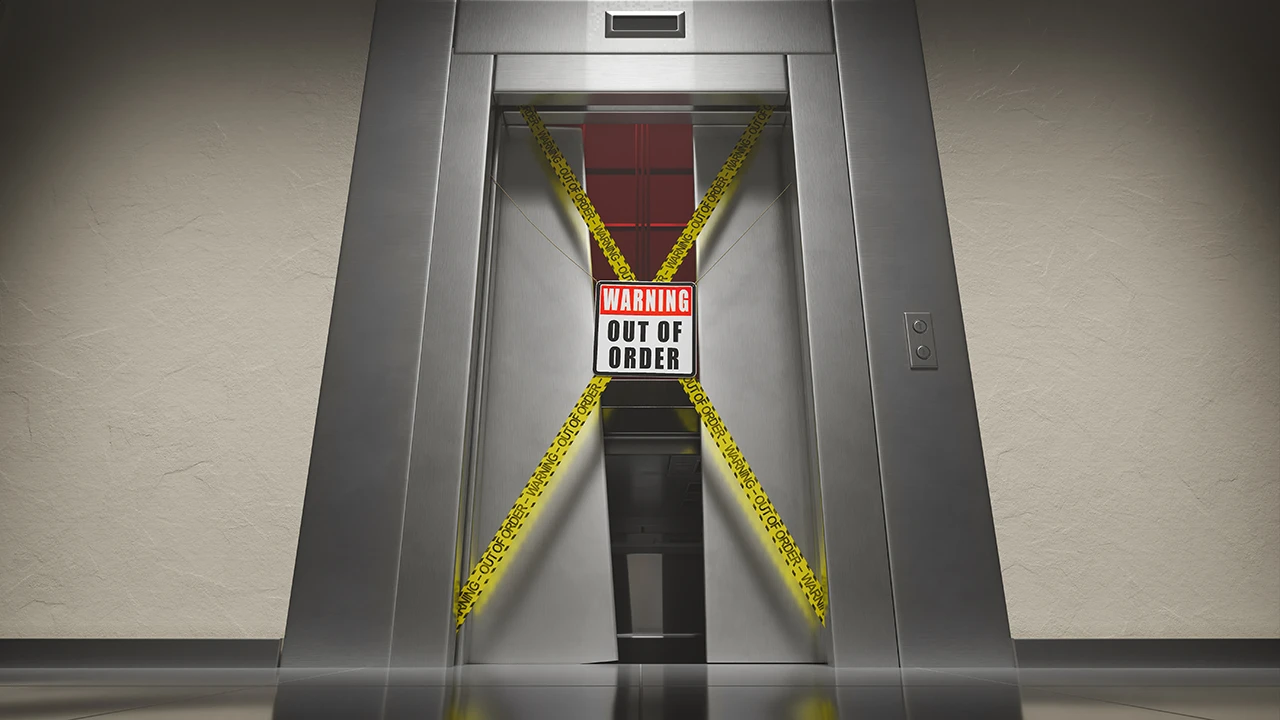
Injured in an Elevator Accident in Florida? What You Need to Know
Elevator accidents in Florida often involve multiple liable parties, including building owners, maintenance companies, and manufacturers. Understanding liability, documentation, and immediate steps is critical to protecting your legal rights and securing compensation.

Quick Summary
Elevator accidents in Florida are rarely simple. Liability often involves multiple parties, including building owners and maintenance providers. Immediate documentation and medical care are critical to preserving your claim.
Key Takeaways:
- Building owners have non-delegable liability for elevator safety in Florida
- Most elevator injuries result from misleveling and door malfunctions
- The first hour after an accident directly impacts case strength
- Multiple parties often share responsibility in elevator claims
- Psychological trauma is compensable under Florida law
Last Reviewed: April 2026
Applies to: Florida law
Content Type: Legal Guide
Definition: An elevator accident in Florida is any injury caused by malfunction, improper maintenance, or defective design of an elevator system, creating liability under premises and product liability law.
The Legal Definition Doesn't Match What You Think
Most people assume an elevator accident means the thing plummets down the shaft like in the movies, but that almost never happens. What does happen is far more mundane and far more common.
What does happen: You step into an elevator that stops six inches above the floor. You trip. You tear your ACL. Or the doors close on your arm. Or the elevator jerks to a stop and you hit your head on the wall.
Roughly 25% of all elevator incidents involve misleveling — when the car stops above or below the floor you're trying to access. You don't see it coming. You step forward expecting solid ground. Your body absorbs the impact.
I've had clients tell me they felt stupid for getting hurt this way. They weren't paying attention. They should have looked down.
But here's the thing: the law doesn't care if you were paying attention. If the elevator malfunctioned, someone is responsible for that malfunction. Your awareness doesn't change the liability equation.
The legal definition of an elevator accident in Florida covers any injury caused by elevator malfunction, improper maintenance, or design defects. It includes getting stuck between floors. It includes door malfunctions. It includes sudden stops that throw you off balance.
If the elevator didn't work the way it was supposed to work, and you got hurt because of it, that's an elevator accident.
What to Do Immediately After an Elevator Accident: The First 60 Minutes
I can usually tell within five minutes of talking to a potential client whether their elevator accident case will be straightforward or a nightmare.
The difference comes down to what happened in that first hour after the incident.
Here's what I've seen kill otherwise solid cases:
You don't report it immediately. You feel embarrassed. You're running late. You just want to get to your appointment. So you brush yourself off and keep moving.
Two days later, your back is screaming. You go to the doctor. You call me. And now we're trying to prove that your injury came from an elevator malfunction that nobody documented.
You don't get witness information. Other people saw what happened. They saw you fall. They saw the elevator door malfunction. But you didn't get their names or contact information, and now they're gone.
You accept help from building management without documenting anything. Someone from the building comes over, asks if you're okay, maybe offers to call someone for you. They're nice. They seem concerned. You don't think to get their name or ask them to write down what they observed.
That conversation? It never happened, according to their records.
Whether you're in a Miami high-rise, a Jupiter medical building, or anywhere in South Florida, here's what protects your rights in that first hour:
Report the incident to building management or security immediately. Get a copy of the incident report. If they say they'll email it to you later, get the name and contact information of the person who took the report.
Take photos. The elevator interior. The floor where it stopped. Any visible damage or defects. The elevator number or identifier. The building address.
Get witness contact information. Names and phone numbers at minimum.
Seek medical attention if you're hurt, even if it seems minor. The medical record creates a timeline that connects your injury to the incident.
I know this sounds clinical when you're shaken up and in pain. But I've watched good cases fall apart because people were too polite or too embarrassed to insist on documentation.
What you do immediately after an accident directly impacts your case. If you want a clear step-by-step breakdown of what to do next, read what to do immediately after an accident in Florida.
Who's Liable for Elevator Accidents in Florida? It's Complex
When an elevator malfunctions in Florida, you're not just dealing with one potentially liable party. You're dealing with a web of responsibility that often includes three or more entities.
Building owners have what Florida law calls a "non-delegable duty" to maintain elevators safely. This is crucial. It means they can't escape liability by hiring a maintenance company and saying "we delegated that responsibility."
If the elevator wasn't safe, the building owner is on the hook. Period.
But that doesn't mean they're the only party responsible.
Maintenance companies can be liable if they failed to perform required inspections or repairs. Manufacturers can be liable if there was a design defect or if they failed to warn about known risks.
I've had cases where all three were at the table.
The building owner knew the elevator had been malfunctioning but didn't take it out of service. The maintenance company missed the problem during their last inspection. And the manufacturer had issued a recall notice that nobody acted on.
Each party points at the others. Each has their own insurance company and legal team. And you're sitting in the middle trying to get your medical bills paid.
Elevator accident claims often involve multiple responsible parties, which is why understanding how fault works is critical. If you're unsure how liability is determined after an accident, it helps to understand what really happens when you're blamed for an accident in Florida.
This is why elevator accidents in Florida create such complex litigation. It's not a simple car accident where you have two drivers and two insurance companies. It's a multi-party puzzle where everyone has an incentive to shift blame.
The Documentation You Need (And Why It Matters More Than You Think)
I tell every client the same thing: your memory of what happened will fade. The physical evidence will disappear. The witnesses will move on with their lives.
Documentation is what separates strong claims from denied ones. If you want to understand how insurance companies evaluate evidence and where cases fall apart, this explains it clearly: why insurance companies are stalling your claim and what to do about it.
Documentation is the only thing that survives long enough to matter in court.
Here's what I need to build a strong case, based on patterns I've seen over 15 years:
Medical records that connect your injury to the incident. You went to the ER the same day. The doctor's notes say "patient reports injury from elevator malfunction." That's gold.
You waited three days and then went to your primary care doctor who wrote "patient reports back pain, onset unknown"? That's a problem.
Maintenance records for the elevator. These are often difficult to get, but they're critical. They show whether the elevator had a history of problems. Whether required inspections were completed. Whether repairs were made.
In Florida, building owners must maintain detailed records. We can subpoena them. But the earlier we start that process, the better.
Your own contemporaneous notes. Write down what happened while it's fresh. Date and time. What you felt. What you saw. What people said to you. What hurt immediately versus what hurt later.
I've had cases turn on these details. The building claims the elevator was functioning normally that day. But your notes say the elevator made a grinding noise before it stopped. That grinding noise suggests mechanical failure, which we can investigate.
Photos and videos. I mentioned this earlier, but it's worth repeating. Visual evidence is powerful. Juries understand photos in a way they don't always understand technical testimony about elevator mechanics.
The challenge is that building owners often repair or replace malfunctioning elevators quickly. If you don't document the condition immediately, that evidence is gone.
What the Elevator Industry Doesn't Advertise
The elevator industry markets itself on safety. And elevators are remarkably safe compared to other forms of transportation.
But that safety record obscures some uncomfortable realities.
Approximately 17,000 people suffer elevator-related injuries annually in the U.S., with about 30 deaths per year. Most of these injuries are preventable through proper maintenance and adherence to safety protocols.
Florida averages three elevator-related deaths per year. The state takes elevator safety seriously enough that they require certificate of operation holders to report any elevator accident within five working days or face fines up to $1,000.
But here's what that reporting requirement tells you: accidents happen frequently enough that Florida needed to create a mandatory reporting system with financial penalties for non-compliance.
I've also seen a disturbing pattern with residential elevators. Over 117,100 residential elevators were recalled in 2022 due to child entrapment hazards. Children can get trapped in the space between the exterior landing door and interior elevator car door. When the elevator is called to another floor, catastrophic injuries occur.
This isn't theoretical. These recalls happened because children were getting hurt.
And here's something most people don't realize: half of elevator-related deaths involve workers repairing or working on elevators. Workers are killed and injured in significant numbers each year while working in or near elevator shafts.
The industry knows where the risks are. But that information doesn't always filter down to the people using elevators every day.
Why Many Attorneys Won't Take These Cases
I'm going to be honest with you about something that might surprise you.
Elevator accident cases are hard. They're expensive to litigate. They require expert witnesses who can explain complex mechanical systems to a jury. They involve multiple defendants with deep pockets and experienced legal teams.
Many personal injury attorneys look at an elevator case and pass.
The economics don't work unless the injuries are severe enough to justify the investment. A simple soft tissue injury from an elevator malfunction might be a legitimate case, but it's not economically viable to pursue against three defendants who will each fight every step of the way.
This is also why many cases break down early in the process. If you want to understand how strong cases are actually built and valued, read the difference between a good offer and a great settlement.
This creates a gap in access to justice. People with moderate injuries from clear elevator malfunctions can't find representation because the math doesn't work.
But here's the other side of that coin: proving negligence in elevator cases is genuinely complex.
You need to show that the elevator malfunctioned. That the malfunction was caused by negligence, not just normal wear and tear. That the responsible party knew or should have known about the risk. That their failure to address the risk directly caused your injury.
Each of those elements requires evidence. Often technical evidence that needs to be interpreted by experts.
I take these cases because I've developed the expertise and the network of experts over 15 years. I know which engineers can analyze elevator maintenance records. I know which medical experts can connect mechanical malfunctions to specific injury patterns.
But I understand why other attorneys look at the same case and see more risk than reward.
That said, if you've been injured—whether it's a severe injury or something that seems moderate but is affecting your life—don't self-disqualify. Let me assess your case. I've taken cases others have turned away because I saw the merit they missed. The only way to know is to talk.
Elevator Accident Injuries: When to Seek Medical Attention (Even If You Feel Fine)
This is where my experience representing victims intersects with basic medical reality.
You get thrown around in an elevator malfunction. Your body floods with adrenaline. You feel shaken but okay. You don't think you need a doctor.
Three days later, you can't turn your neck. Or your knee swells up. Or you're getting headaches that won't quit.
Here's what I've learned: soft tissue injuries and concussions often don't show symptoms immediately. Your body is in survival mode. The pain comes later.
But from a legal perspective, waiting to seek medical attention creates problems.
The insurance company will argue that your injury couldn't have been that serious if you didn't see a doctor right away. They'll suggest that something else caused your symptoms in the days between the incident and your doctor's visit.
They'll question the connection between the elevator malfunction and your injury.
I'm not telling you to run to the ER for every minor bump. I'm telling you that if you were involved in an elevator malfunction that threw you off balance, caused you to fall, or struck you in any way, you should get checked out.
Let a medical professional assess whether you're injured. Let them document your condition while it's still clearly connected to the incident.
This isn't about building a legal case. It's about protecting your health and your rights simultaneously.
Even minor symptoms can turn into serious claims if documented correctly. This is where many people make mistakes early, especially when they assume medical bills are the only factor in a personal injury claim.
The Emotional Toll Nobody Warns You About
Here's what they don't tell you in the emergency room: the physical injuries are only part of what you're dealing with.
I've had clients who healed physically within weeks but couldn't bring themselves to step into an elevator for months. The panic attacks started every time they heard an elevator bell. They'd take the stairs—even ten floors up—rather than face that enclosed space again.
One client told me she broke down crying in a parking garage elevator with her kids. She felt ridiculous. She knew statistically it was safe. But her body remembered what her mind was trying to forget.
Elevator accidents create psychological trauma that's real, compensable, and often more debilitating than the physical injuries.
You might be experiencing:
Anxiety and panic attacks when approaching elevators or even thinking about them. Your heart races. You start sweating. You feel trapped before you even step inside.
PTSD symptoms if you were trapped between floors or experienced a sudden fall. The darkness. The helplessness. The not knowing if help was coming. Those feelings don't just disappear when the doors finally open.
Hypervigilance about every sound or movement in elevators. You analyze every jerk, every delay, every unusual noise. You position yourself near the doors. You're constantly planning your escape route.
Avoidance behavior that affects your daily life. You turn down job opportunities in tall buildings. You avoid medical appointments on upper floors. You plan your entire day around stairs.
Sleep disruption from recurring nightmares about the incident. You wake up feeling like you're falling or trapped.
And then there's the stress of dealing with insurance companies, medical bills, and uncertainty about your future—all while you're trying to heal and return to normal life.
Under Florida law, you can recover damages for mental and emotional suffering caused by an elevator accident. This isn't a "bonus" claim. It's recognizing that psychological injuries are real injuries that impact your quality of life, your ability to work, and your relationships.
I don't minimize what you're going through. If you're dealing with anxiety, fear, or emotional trauma after an elevator incident, that's part of your case. That's part of what we're fighting for.
Because getting you back to normal life means addressing all the ways the accident changed you—not just the physical scars you can see.
My Approach When Someone Calls Me After an Elevator Accident
I've handled enough of these cases to know that the person calling me is usually dealing with more than just physical pain.
They're scared. They don't understand what happened or why. They're worried about medical bills. They're dealing with an injury that might affect their ability to work.
If you're reading this because someone you care about was injured in an elevator accident, I want you to know: your instinct to help them find answers is right. These cases are complex, and your loved one needs an advocate who understands what they're facing. Encourage them to call, or call on their behalf. We'll take it from there.
And they're navigating a system that feels designed to minimize their experience.
My client-centered approach starts with understanding that this is their one case. I might be handling multiple cases simultaneously, but for them, this is potentially their only opportunity to achieve justice and fair compensation.
I don't take that lightly.
The first thing I do is listen. What happened? What hurts? What are you worried about? What questions do you have?
Then I explain the process in plain language. What we need to investigate. Who the potential defendants are. What the timeline looks like. What you can expect from me and my team.
I make myself accessible in a way that's uncommon in personal injury practice. You're not talking to a paralegal or a case manager unless you want to. You're talking directly to me. My 15 years of experience is completely accessible to you.
Because here's what I understand from my own experience with serious injury: when your life gets turned upside down by an accident, you need someone who knows what they're doing and who treats your case like it matters.
I was in a coma for a week after a car accident when I was 17. I know what it feels like when tragedy disrupts everything. I know the fear and uncertainty that comes with serious injury.
That experience shapes how I practice law. It's why I focus on personal injury. It's why I take elevator accident cases even though they're complex and difficult.
Because someone needs to.
What to Do Right Now After an Elevator Accident
If you've been injured in an elevator accident, time matters.
Evidence disappears. Memories fade. Witnesses become harder to locate.
The building owner's insurance company is already working to minimize their exposure. You need someone working just as hard to protect your interests.
Florida's statute of limitations gives you a limited window to take action. And every day that passes, critical evidence disappears. Security footage gets deleted. Witnesses' memories fade. Maintenance records become harder to obtain.
Don't wait to see if the pain gets better on its own. Don't assume your case isn't "serious enough" because you're not hospitalized. Don't let embarrassment or uncertainty keep you from protecting your rights.
Call me now for a free consultation—no pressure, just straight answers. I'll give you a honest assessment of your situation. If you have a case, I'll explain what we need to do and what you can expect. If you don't have a case, I'll tell you that too.
I've been doing this for 15 years. I've collected over $100 million in settlements for my clients. I've tried numerous cases to verdict, including my first million-dollar verdict in 2008.
But more than the numbers, I understand what you're going through. And I know how to navigate the legal system to get you the outcome your case merits.
You can reach Kris Torres Injury Law at our offices in Miami and Jupiter, Florida. Let's talk about what happened and what comes next.
Because you deserve someone in your corner who knows elevator accident cases inside and out. Someone who will treat your case like it's the only one that matters.
That's what I do.
What Happens When You Call
We talk. For real. No receptionist runaround. I listen to what happened, what hurts, what you're worried about.
I tell you if you have a case. If you do, I explain the process in plain language. If you don't, I tell you that too. No charge, no pressure.
If you decide to work with me, you get my cell phone number. Not a case manager. Not a paralegal. Me.
Stop Second-Guessing Yourself
Look, I know what you're thinking. Your pain isn't as severe as some of the examples here. You're walking around. You're functioning.
But something is telling you to get more information. Maybe you're avoiding elevators. Maybe you're worried about medical bills piling up. Maybe you're wondering if this is "serious enough" to warrant legal help.
Stop second-guessing yourself. The only way to know is to talk. I've taken cases others dismissed because I saw what they missed. Worst case? I tell you your situation doesn't need legal action, and you have peace of mind. Best case? We protect your rights before it's too late.
You deserve someone in your corner who knows elevator accident cases inside and out. Someone who will treat your case like it's the only one that matters.
Frequently Asked Questions About Elevator Accidents in Florida
What should I do immediately after an elevator accident?
Report the incident to building management immediately and insist on written documentation. Take photos of the elevator interior, the floor misalignment, any visible damage, and the elevator ID number. Get witness names and phone numbers. See a doctor the same day, even if you think your injuries are minor. The first hour after an accident determines whether you have solid evidence or spend months fighting an uphill battle.
If you're dealing with this right now, you should also understand what happens after the initial report and how cases develop over time. You can read what the personal injury process really looks like from crash to compensation.
Who is liable when an elevator malfunctions in Florida?
Building owners can't escape responsibility by hiring a maintenance company. Florida law calls this a "non-delegable duty." I've had building owners try to say "we hired someone to handle that." Doesn't work. They're still on the hook. But that doesn't mean they're the only party responsible. Maintenance companies face liability for failed inspections. Manufacturers face liability for design defects. Most cases involve all three pointing fingers at each other while you're stuck in the middle.
How long do I have to file an elevator accident lawsuit in Florida?
Florida's statute of limitations creates a deadline to file legal action. But the real problem starts much sooner. Security footage gets deleted. Witnesses forget details or move away. Maintenance records become harder to obtain. I've seen critical evidence disappear within weeks. Call an attorney within days, not months, to protect your rights.
Will insurance companies cover psychological trauma from an elevator accident?
Absolutely. Florida law recognizes mental and emotional suffering as real, compensable injuries. If you're having panic attacks near elevators, taking stairs ten floors up to avoid enclosed spaces, or waking up from nightmares about being trapped, those are legitimate damages. I've had insurance companies try to dismiss psychological trauma as "not real injuries." They're wrong, and Florida law backs that up.
Why do many attorneys refuse elevator accident cases?
These cases are expensive and complex. You need expert witnesses to explain elevator mechanics to a jury. You're fighting multiple defendants with deep pockets and experienced legal teams. Most personal injury attorneys look at the economics and pass unless the injuries are severe. I take them because I've built the expertise and network of specialists over 15 years. But I understand why other attorneys see more risk than reward.
What if my elevator injury seems minor?
See a doctor anyway. Soft tissue injuries and concussions don't always show symptoms immediately. Your body floods with adrenaline. You feel okay. Three days later, you can't turn your neck. But now insurance companies argue that something else caused your injury in those three days. Same-day medical documentation creates a clear timeline connecting your symptoms to the elevator incident. It protects both your health and your legal rights.
Do I need an attorney for an elevator accident?
Yes, because you're dealing with multiple parties who will shift blame to each other while their insurance companies work to pay you as little as possible. You need someone who understands elevator mechanics, Florida premises liability law, and multi-defendant litigation. I offer free consultations where I give you an honest assessment. If you have a case, I'll tell you. If you don't, I'll tell you that too.
What makes elevator accident cases so complex?
You need to prove the elevator malfunctioned, the malfunction came from negligence (not just normal wear and tear), the responsible party knew or should have known about the risk, and their failure directly caused your injury. Each element needs evidence. Often technical evidence that requires expert interpretation. Add multiple defendants with separate legal teams, and you understand why most general practice attorneys avoid these cases.
Author: Kristopher Torres, Attorney at Law — Law Offices of Robert Dixon
Office: Miami, Florida (201 S. Biscayne Blvd., 28th Floor, Miami, FL 33131)
Service Area: Miami-Dade, Broward, Palm Beach, Martin, St. Lucie, Indian River, Monroe, Glades, Collier, and Lee Counties
Languages: English • Español
Disclaimer:
This article is for informational purposes only and does not constitute legal advice. Reading this content does not create an attorney-client relationship. Results vary by case.
Prospective clients may not receive the same or similar results.
Hurt in Florida? Talk to Kris directly.
Tell me what happened. I review every request personally. The consultation is free, and you pay nothing unless we win.